
The Question Every Manufacturer Asks
Every day at Hilco Vision began with the same ritual: production targets written on a whiteboard, shift schedules posted, machines humming to life. By mid-afternoon, the gap between target and reality would start to reveal itself. Sometimes they were ahead. Often they were behind. Always, there was the same nagging uncertainty: Will we hit our numbers today?
The honest answer was uncomfortable. Nobody really knew until the shift ended and the final count was in. By then, it was too late to change course, too late to adjust priorities, too late to salvage a missed target.
Production planning had become an exercise in educated guessing. Set ambitious goals, work hard, hope for the best, and deal with whatever outcome materialized at 5:00 PM. Some days brought pleasant surprises. Other days brought explanations for why targets were missed—vague references to "machine issues" or "unexpected delays" that lacked the data to prevent recurrence.
What Hilco Vision needed wasn't hope. It was certainty. Not at the end of the day, but in the middle of it—when decisions could still make a difference.
The Predictability Problem
Hilco Vision manufactures precision optical components products where quality and consistency are non-negotiable. But despite running sophisticated equipment and employing skilled operators, their operation suffered from a fundamental flaw: unpredictability.
Production targets were set each day, but whether they'd be met was essentially a coin flip. Some days they'd exceed goals by 15%. Other days they'd fall short by 20%. The variability wasn't random there were causes but those causes were invisible.
When they missed targets, the post-mortem was always unsatisfying:
- "The machines were down a lot today" (But why? For how long? Which ones?)
- "We had some quality issues" (When did they start? What triggered them?)
- "Setup took longer than expected" (How much longer? Which setups specifically?)
Without data, every explanation was vague. Without visibility, every day was a surprise.
The Turning Point: What If We Could Predict the Future?
Hilco Vision deployed IoTFlows with a specific goal: make production outcomes predictable before they happen.
Two systems working in concert transformed their operation:
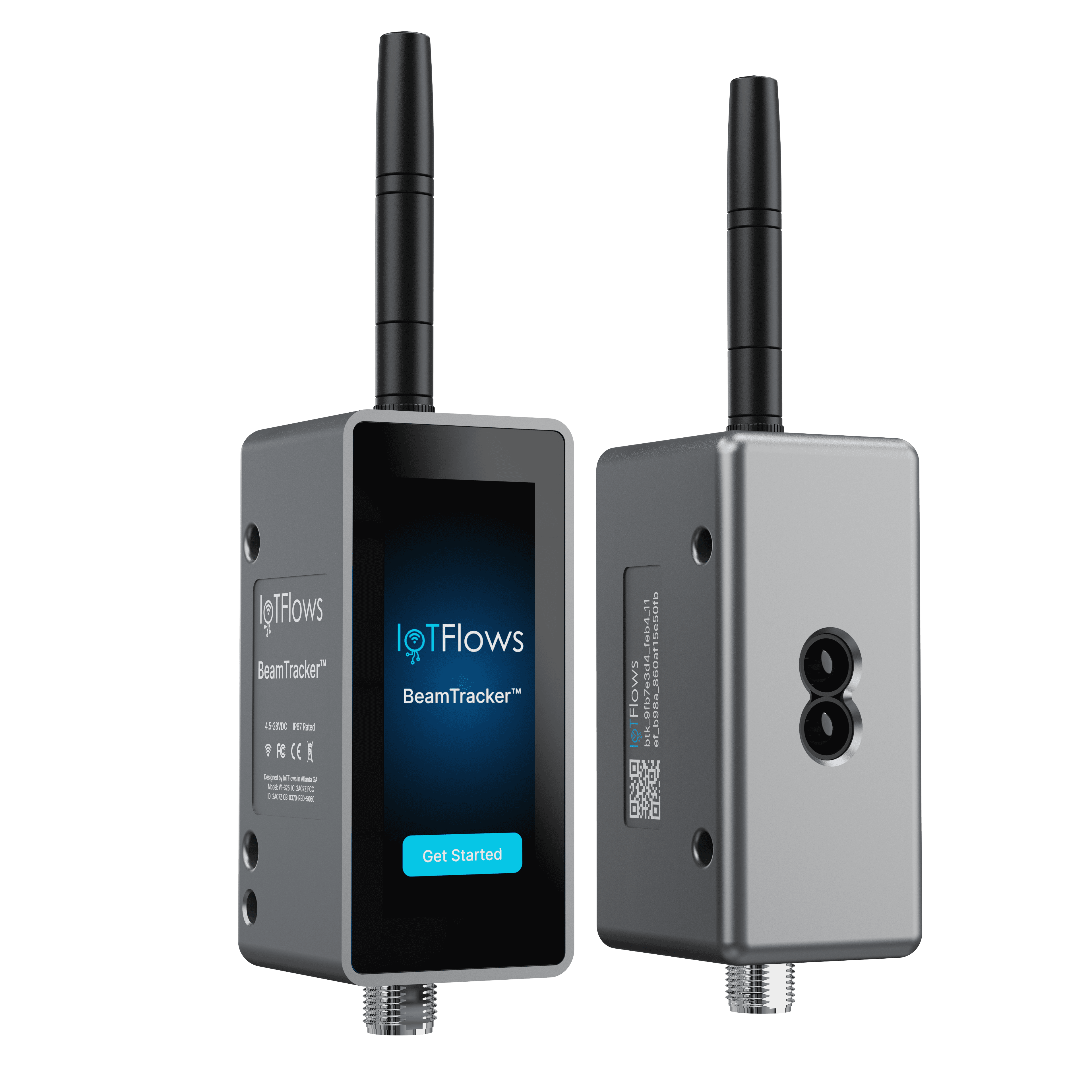
BeamTracker became their crystal ball tracking production rates with such precision that by mid-afternoon, it could calculate with confidence whether they'd hit daily targets. Not a guess. Not a hope. A data-driven prediction.
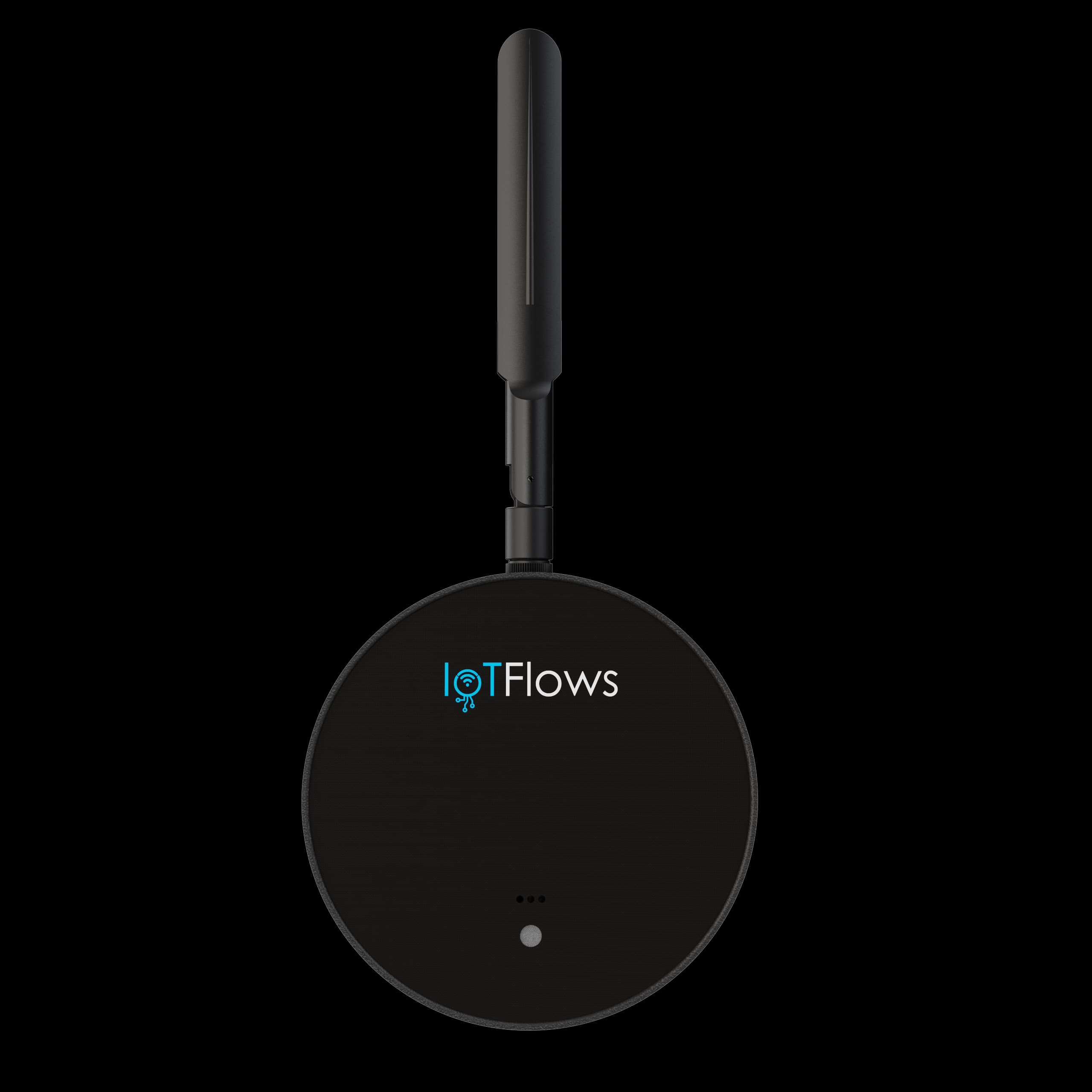
SenseAi became their operational intelligence engine capturing every machine event, every stoppage, every anomaly, and turning raw sensor data into actionable insights through algorithmic analysis.
Together, these systems didn't just monitor production. They created a predictive control loop that fundamentally changed how Hilco Vision operates.
From Reactive to Predictive: The Three Capabilities That Changed Everything
1. The Prediction Engine: Know Your Outcome Before It Happens
BeamTracker doesn't just count parts. It calculates velocity, identifies trends, and projects outcomes in real-time.
Now, at 2:47 PM on a Tuesday, the production manager doesn't wonder if they'll hit 40,000 units. The system tells them:
Target: 40,000 units | Current: 26,800 | Projected: 38,600 | Alert: 1,400 units short
That 1,400-unit gap is visible with two hours left in the shift. Not at 5:00 PM when it's too late. At 2:47 PM when they can do something about it.
The response is immediate:
- Identify which line is running slowest
- Check if an operator needs support
- Adjust priorities to focus on high-velocity products
- Allocate resources to the bottleneck
By 5:00 PM, the board shows 40,200 units. Target exceeded.
This is the power of predictive visibility. Not knowing what happened. Knowing what will happen in time to change it.
Shift from Hope to Control: "Before IoTFlows, we'd set a target and hope we hit it. Now we know by mid-afternoon exactly where we'll land and whether we need to adjust. That shift from hoping to knowing is everything. It turns production management from firefighting into orchestration."
Swapnil Rane, Engineering Manager, Hilco Vision
2. The Intelligence Layer: Making Sense of Complexity
Optical manufacturing isn't simple. Machines behave unpredictably. Some processes run smoothly for hours, then suddenly slow down. Understanding why required detective work until SenseAi automated the investigation.
SenseAi uses algorithmic analysis to turn raw machine data into production intelligence:
- Pattern recognition algorithms identify when machine behavior deviates from normal operation, flagging potential issues before they cause major downtime
- Real-time production estimation calculates expected output for processes that previously had no reliable forecast
- Anomaly detection catches unusual events that would otherwise go unnoticed until they became critical problems
What used to require a production engineer manually reviewing logs now happens automatically. The system doesn't just capture data it understands it.
3. The Elimination Strategy: Every Downtime Event Becomes an Opportunity
Here's where most manufacturers fail: they capture downtime data, but never systematically eliminate the root causes.
Hilco Vision built something different: a downtime elimination process.
Every stoppage is:
- Captured - SenseAi logs the exact time, duration, and machine
- Categorized - Was it equipment failure? Setup delay? Quality issue? Material shortage?
- Analyzed - BeamTracker shows cumulative impact over days and weeks
- Prioritized - Which categories cost the most production time?
- Targeted - Create specific elimination or minimization plans for the biggest offenders
This isn't about monitoring downtime. It's about systematically destroying it.
The Downtime Elimination Cycle
Week 1-2: Discovery Phase
- Capture and categorize all downtime events
- Identify top 3 causes by cumulative impact
- Surprising finding: "Minor" stoppages add up to 18% of total downtime
Week 3-4: Intervention Phase
- Target #1 cause with specific process improvement
- Track whether intervention reduces frequency or duration
- Adjust approach based on results
Week 5-8: Validation Phase
- Compare downtime patterns before and after intervention
- Calculate ROI of improvement initiative
- Move to next highest-impact category
Result: Systematic, data-driven reduction of previously "unavoidable" downtime
The Complete Factory Digital Twin
The combination of SenseAi and BeamTracker created something Hilco Vision never had before: a complete digital representation of their factory floor.
Every machine. Every operator. Every process. All visible in real-time with predictive insights layered on top.
What this means practically:
- Morning: Review overnight production vs. targets, identify which lines need attention
- Mid-shift: Check real-time projections, course-correct if falling behind
- End of day: Analyze downtime by category, prioritize tomorrow's improvements
- End of week: Compare performance trends, validate improvement initiatives
- End of month: Calculate cumulative impact of systematic downtime elimination
This isn't a dashboard they check occasionally. It's the operational nervous system of the business.
The Cultural Transformation
Technology enables change, but culture determines whether it sticks.
Hilco Vision's transformation wasn't just about sensors and algorithms. It was about changing how the team thinks about production management.
Before:
- Reactive: Respond to problems after they occur
- Blame-oriented: "Who caused the downtime?"
- Acceptance: "Some days are just bad days"
After:
- Proactive: Predict and prevent issues before they impact targets
- Process-oriented: "What caused the downtime and how do we eliminate it?"
- Systematic: "Every problem is an opportunity for permanent improvement"
The data made this cultural shift possible. When downtime is categorized and tracked, conversations move from blame to solutions. When predictions show target shortfalls with time to correct, teams can act rather than react.
Why Predictability Matters More Than Speed
Many manufacturers focus on running faster higher line speeds, faster setups, quicker changeovers. Hilco Vision discovered something more valuable: predictability.
A production line that runs at 90% capacity but hits targets consistently is more valuable than one that sometimes runs at 110% but frequently misses goals. Customers don't care about your best day. They care about reliable delivery.
BeamTracker's predictive alerts transformed Hilco Vision from a manufacturer that sometimes exceeds expectations to one that consistently delivers on commitments. That reliability is a competitive advantage no amount of speed can replicate.
The Difference Between Visibility and Intelligence
Most "smart factory" implementations stop at visibility: dashboards showing machine status, production counts, and downtime totals.
Hilco Vision went further. They built operational intelligence:
- Visibility tells you a machine is down. Intelligence tells you why and predicts when it will happen again.
- Visibility shows you missed a target. Intelligence warns you two hours before the shift ends that you're going to miss it.
- Visibility captures downtime. Intelligence prioritizes which downtime to eliminate first based on cumulative impact.
The difference isn't semantic it's the gap between reactive data collection and proactive operational control.
Looking Forward: From Firefighting to Orchestration
Hilco Vision's journey isn't finished. They're now expanding their predictive capabilities:
- Predictive maintenance - using SenseAi pattern recognition to identify machines showing early signs of degradation
- Dynamic scheduling - leveraging BeamTracker's production velocity data to optimize job sequencing in real-time
- Quality correlation - connecting downtime events to quality metrics to catch issues before they reach customers
- Cross-facility benchmarking - comparing performance patterns across production areas to identify best practices
But the foundation is set: complete factory digitization, predictive production control, and systematic downtime elimination.
The result: A manufacturing operation that doesn't react to problems it anticipates them, prevents them, and continuously eliminates their root causes.
The Answer to the Question
It's 2:47 PM on a Tuesday. The production target is 40,000 units. Current count: 26,800.
The production manager doesn't wonder if they'll make it. The screen shows: Projected final count: 40,200 units.
They'll exceed the target. They know this with two hours left in the shift. Not because of luck. Not because of hope.
Because unpredictable became predictable.