


Hugo Benzing's plant in Wixom, Michigan, plans coiling, heat treatment and packing in the IoTFlows Production Scheduler. Planning the tubes, racks and boxes every order depends on, not just the machines, has raised efficiency by 20%. The planners save more than 10 hours a week, and the schedule was live in under two weeks.
The Challenge
Hugo Benzing has made safety elements for moving parts for more than 90 years. Its retaining rings, snap rings and other rings hold assemblies together inside car engines, and its US plant, Hugo Benzing LLC, makes them by the tens of thousands.
 Benzing rings at work inside a transmission. Image: Hugo Benzing.
Every ring order takes the same route through the plant:
- Coiling. A coiling machine forms the rings from wire.
- Heat treatment. The rings are loaded into tubes, 150 to 200 to a tube depending on the ring's size, and the tubes go into an oven.
- Packing. The finished coils run through a shrink-wrap conveyor and are packed for the customer.
The coilers and the ovens are easy to put on a schedule. What runs out first is everything that travels with the rings: the heat-treat tubes, the racks and the boxes. The plant runs more than 10 types of tube, with tens to hundreds of each. A 50,000-ring order alone fills somewhere between 250 and 334 tubes, and every one of them is in the oven, not on the shelf, until that order's heat treatment ends. Whether the next ring size can go into an oven on Thursday depends as much on how many tubes, racks and boxes are free by Thursday as on whether an oven is.
Hugo Benzing's planners answered those questions in a stack of complex Excel sheets:
- One sheet per question. How long each coiling run would take, when each oven was free, how many tubes, racks and boxes were out.
- No view of the knock-on effect. None of the sheets showed what happened to everything else when one order moved, and with several ring sizes running at once, orders move every day.
- No live numbers from the floor. Coiler uptime and the coils actually made came in after the fact, so the plan and the plant drifted apart during the shift.
The Solution
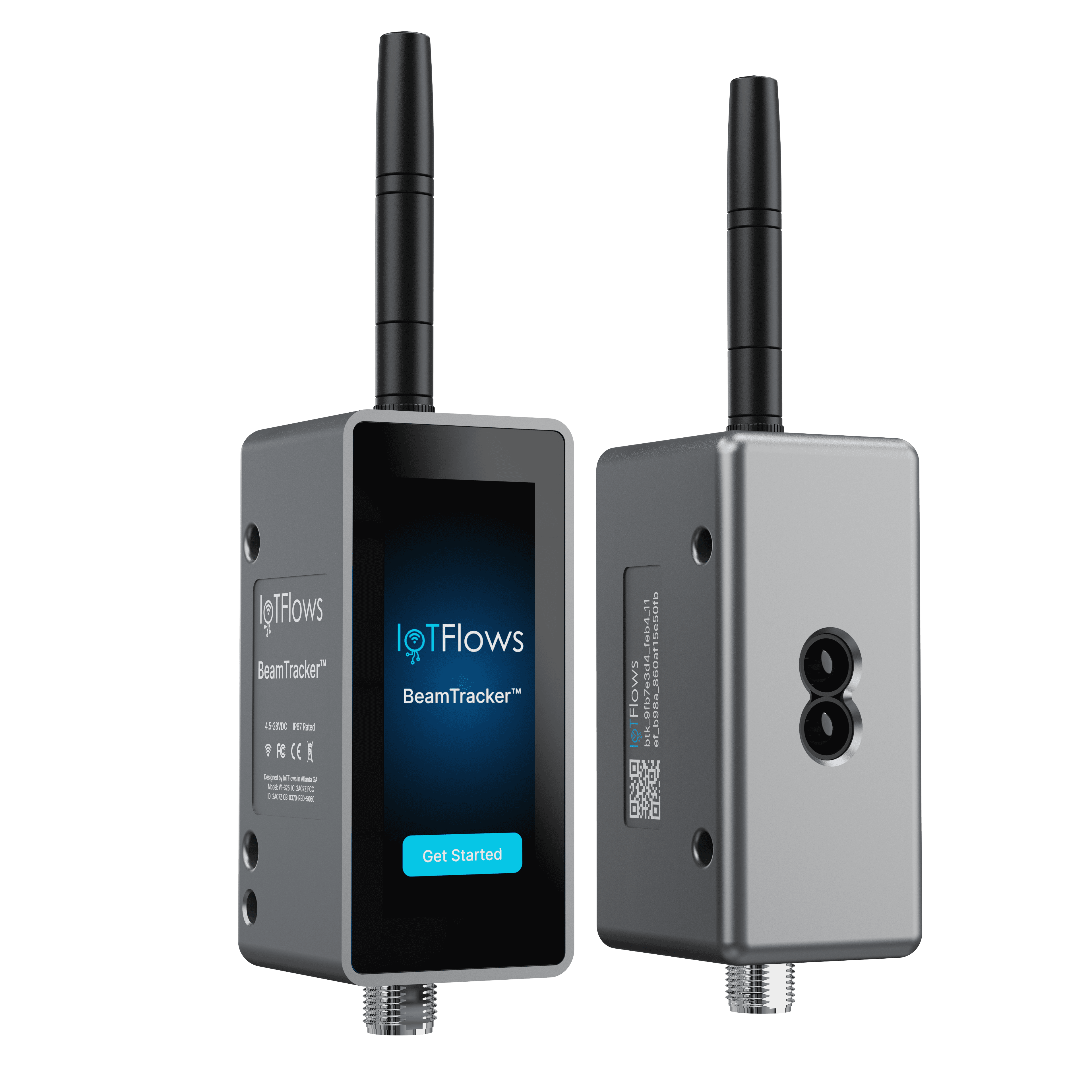
Hugo Benzing put the whole route, from coiling to packing, on IoTFlows: SenseAi on the coiling machines, BeamTracker on the packing line, and the Production Scheduler on top of both. The planners were scheduling live in under two weeks.
SenseAi on every coiling machine
SenseAi sensors on the coilers track uptime and downtime and count the coils each machine makes, live. The planners see whether a coiling run is on pace while it is still running, not at the end of the shift.
BeamTracker after the shrink-wrap conveyor
A BeamTracker counts every assembled coil as it leaves the shrink-wrap conveyor, so the number packed for a customer is a count, not an estimate.
Every job built in the Production Scheduler
The planners build every job directly in the Production Scheduler, from the part and operation data already set up in IoTFlows. There is no ERP import in between: the routing for each ring, coil, heat-treat and pack, is already on the part, so every new order starts from it.
Tubes, racks and boxes as tooling
The tubes, racks and boxes are each set up as a reusable tool that a job reserves for as long as it needs them. Under the Gantt, the capacity lane starts from what is on the shelf today and draws, for each one, how many are free at every moment of the week, which order is holding them and when they come back.
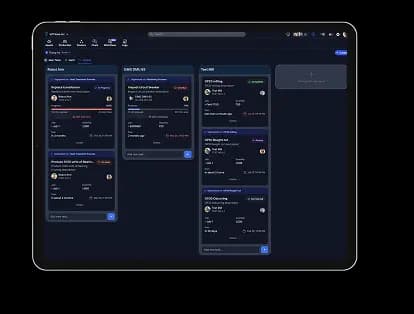
 A simplified view of a week like Hugo Benzing's: the coiler, the ovens and packing on the Gantt, with the heat-treat tubes and the projected output in the capacity lane below.
Where the plan breaks, seen first
Those lines are where a plan breaks, and where the planners now see it break first. Take the tubes. Drag the snap rings' heat treatment a day earlier and the line drops below zero, in rose, before anything is saved. Move it back to when the retaining rings' tubes return and the shortage is gone. The same shortage appears in the Schedule issues list as tooling with no units free, so it cannot hide on a part of the Gantt nobody is looking at.
 Moving the snap rings into the oven a day early: the tubes go 150 short while both heat treatments overlap, and the scheduler shows it before the change is saved.
How many rings will be ready to ship
Because each operation declares the rings it makes, the capacity lane also projects output: how many retaining rings will be finished, and by when, and how many coiled rings are waiting for an oven at any point in the week. It starts from what is already on hand, so the planners see where they stand today and where they will be by Friday. See Link required and created parts to an operation.
The Results
From Spreadsheets to One View
- 20% more efficiency from optimizing the tubes, racks and boxes every order depends on
- 10+ hours of planning saved every week
- Under two weeks from kickoff to planning live in the Production Scheduler
- One view of the coilers, the ovens, the tubes, racks and boxes, and the rings ready to ship
- Tube, rack and box shortages seen while planning, before a job is saved, instead of on the floor
- Live coiling numbers from SenseAi: uptime, downtime and coils made on every coiler
- Every packaged coil counted by BeamTracker after the shrink-wrap conveyor
- A stack of complex Excel sheets retired, along with the rework every time an order moved
For a plant where one shared resource decides what every machine can do next, that is the difference between finding a conflict on Thursday morning and seeing it on Monday, while there is still time to move something.
"We love the entire IoTFlows platform. It has revolutionized our visibility into our operations, from the coilers to the ovens to the packing line."
Morne Grobler, Operations Manager, Hugo Benzing
The Features Behind It
- SenseAi on the coiling machines for uptime, downtime and coil counts. See SenseAi.
- BeamTracker on the packing line for a count of every packaged coil. See BeamTracker.
- Gantt planning across coilers, ovens and packing lines. See Plan jobs in five views.
- Tooling capacity for the tubes, racks and boxes, with each shortage drawn before it happens. See Read the capacity lane.
- Projected output for every ring, from what is on hand and the parts each operation creates. See Link required and created parts to an operation.
- Schedule issues that list any tool with no units free. See Find and fix problems in the schedule.