

Enterprise
Custom integrations for every PLC, robot and ERP in your plant
When a sensor isn’t enough, our engineers connect IoTFlows straight to your controllers, robots and ERP. The data lands in the same dashboards, alerts, schedule and work orders.
What it connects
Anything on the floor. Anything in the office.
The IoTFlows edge device reads your PLCs, robots and sensors over any protocol, and we build the connector to your ERP. Every new signal works like the rest of IoTFlows: on the machine monitoring dashboards, in event rules, and in the Production Scheduler and Maintain.
PLCs and controllers
Cycle counts, alarms, programs and process values from Siemens, Allen-Bradley and any other controller, and from CNCs over MTConnect.
Robots
Every cycle, fault and weld from the robot and the tool on its arm, scored as it happens.
Analog and digital sensors
The transmitters already on the machine, with alerts and work orders on any value.
Your ERP, both ways
Jobs come in from the ERP; the machining and labor hours behind each one go back.
Where plug-and-play ends
Sensors hear the machine. The controller knows why.
Most plants start with sensors on every machine. A custom integration adds what only the PLC, the robot or the ERP can tell you.
Every plan · minutes per machine
What a sensor hears
Running, idle or down
Utilization and every stop, from a sensor on any machine with a motor.
Vibration health
Bearing wear and imbalance, scored before they become a failure.
Part counts
Every part that passes BeamTracker, against the goal.
Enterprise · typically 50+ machines
What the controller knows
Why it stopped
Alarm codes and program numbers, straight from the PLC.
How every cycle went
Weld, press and process values from robots and controllers.
What the job cost
ERP jobs in, machining and labor hours back.
How a project runs
Live in one week to a month. We do the work.
Our engineers scope, build and validate the integration with your team, and write the driver when a protocol is missing. Priced by project scope.
- 01
Scoping call
Which machines, which signals, which systems, and what you want to see.
- 02
Data mapping
Every PLC tag, robot parameter or ERP field, and where it lands.
- 03
Build
The edge device installed and configured, or the connector written against your API.
- 04
Validation
Checked against your own numbers, machine by machine.
- 05
Handover
Dashboards, alerts, scheduling and maintenance on the new signals.
Any protocol, including
- MTConnect
- OPC UA
- Modbus TCP
- EtherNet/IP
- Profinet
- MQTT
Two-way ERP connectors for

- and others
Customer story
Stanley Black & Decker scores every weld on an automaker’s robotic lines
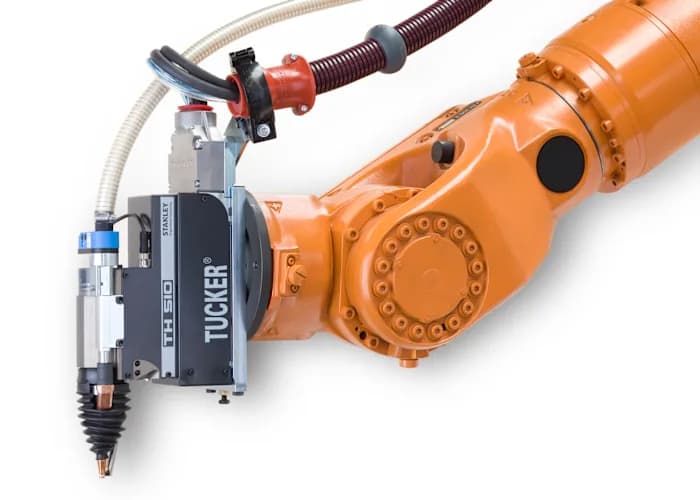
Stanley Black & Decker’s Tucker stud welders build car bodies for a major automotive customer. The IoTFlows edge device pulls every weld from them, line after line.
- 100%
- weld traceability on the robotic lines
- Every data point
- behind each weld
- Per head
- maintenance flagged before quality slips
Challenge
Every weld on a car body has to meet the automaker’s standard, and a welding head wears gradually. The data behind each weld never reached an analytics team in a form it could use.
Solution
The IoTFlows edge device reads every data point from the welders on every line. Stanley Black & Decker’s analytics team scores each weld, and the customer sees how each machine performs and which head needs service before its welds drift.
Products
The IoTFlows edge device and a custom integration, with alerts and integrations on top.

“IoTFlows is one of the best platforms I have ever worked with.”
For MiRus, a two-way Epicor connector went live in about a month and ties every job to its machining and labor hours. Read the MiRus story or see every customer story.
Questions people ask
A custom integration connects PLCs and controllers, robots, and analog and digital sensors to IoTFlows through the IoTFlows edge device, over MTConnect, OPC UA, Modbus TCP, EtherNet/IP, Profinet, MQTT or any other protocol, and builds two-way connectors to your ERP’s own API: Epicor for MiRus, and SAP, Oracle, JobBOSS, ProShop and others the same way. When a protocol is missing, IoTFlows writes the driver instead of asking you to change the machine. The new signals get dashboards, event rules and alerts, analytics, and the Production Scheduler and Maintain on top. IoTFlows engineers deliver it in five steps (scoping call, data mapping, edge device installation or connector build, validation against your numbers, handover), typically in one week to a month. It is an Enterprise service, typically for plants with 50+ machines and often more than one site, priced by project scope.
Yes. The IoTFlows edge device reads cycle counts, alarm codes, program numbers and process values from Siemens, Allen-Bradley and other PLCs and controllers, and from CNC machines over MTConnect, and sends them to IoTFlows, where they get dashboards, alerts and analytics beside your sensor data.
Any protocol a CNC, PLC, controller, robot or sensor speaks, including MTConnect, OPC UA, Modbus TCP, EtherNet/IP, Profinet and MQTT. When one is missing from the edge device, IoTFlows writes the driver as part of the project rather than asking you to change the machine.
Yes, Fanuc and other robot controllers and the equipment on the robot’s arm. For Stanley Black & Decker, the IoTFlows edge device pulls every data point of every weld from the Tucker stud-welding systems on a major automotive customer’s robotic lines; Stanley Black & Decker’s analytics team scores each weld and flags each welding head for maintenance before weld quality degrades.
Yes. Signals from the edge device feed the same event rules as sensor data, so a controller alarm or a process value past its limit can email, push or text the people subscribed to it, post to Slack, Microsoft Teams or Discord, call your webhook, or open a work order in Maintain.
Yes. Two-way connectors are built against your ERP’s own API, so jobs flow into the Production Scheduler and results flow back. For MiRus, the Epicor connector pulls every job and ties it to the machining and labor hours behind it.
Typically one week to a month, depending on the machines and the protocols they speak. The MiRus Epicor connector went live in about a month.
No. Custom integrations are an Enterprise service, typically for plants with 50+ machines, priced by project scope. The plug-and-play sensors and the integrations on every plan are on the integrations page.
Documentation
Want the detail? These guides walk through each feature step by step.
- How IoTFlows worksDevices, the cloud and the dashboard, and how they fit together.
- Overview: alerts and integrationsEvery way IoTFlows tells someone something.
- Event types and channelsThe event types, their thresholds and the six channels.
- Send events to your own endpointHosted webhooks with a signing secret.
Scoping call
Tell us what you want to connect.
Name the machines, the controllers, robots or ERP, and what you want to see. An engineer replies with the questions a scope needs.