


Predictive Maintenance
Predictive maintenance that catches failures before they stop production
SenseAi Embedded reads vibration and temperature at the motor or spindle. IoTFlows scores each machine's health against its own learned baseline or an ISO 10816 class, alerts the right people when it slips, and opens the work order in Maintain before the failure.

Trusted by industry leaders








































































The problem
The failure you did not see coming. It was measurable for weeks.
A spindle bearing, a gearbox, a pump: each one runs for months with a fault that is already measurable and still invisible to the people around it. The stop lands mid-shift, with the part half made. Calendar maintenance replaces bearings that were fine and misses the one that was not. The only way to catch it is to read the machine.
The score
One health score, seven indicators
The Health tab turns the vibration SenseAi Embedded reads into a score from 0 to 100, judged against its baseline, with seven condition gauges beside it: cavitation risk, structural looseness, imbalance, lubrication, alignment, bearing health and temperature, each rated from Good to Unacceptable.
The spectrum
The spectrum behind the score
An FFT with the 1X to 6X harmonics marked and the RPM derived from it, plus a spectrogram and a 3D view. Imbalance, misalignment, looseness and bearing wear each leave a different mark, so the spectrum is shown rather than hidden behind the score.
The trends
Fourteen trends, axis by axis
RMS velocity, crest factor, kurtosis, envelope kurtosis and ten more, on the X, Y and Z axes and the combined vector, each with a note on what makes it rise. The combined XYZ line shows the machine as a whole; the axis pulling it up shows where to look.
The baseline
A baseline that fits the machine
Dynamic Baseline learns the machine’s own normal; four ISO 10816 classes go by power and foundation; eight machine-type profiles, from centrifugal pump to gearbox, expect each machine’s own signature. Change it and the score recalculates, so a machine that runs rough is not red forever and a quiet one is not green while it degrades.
Action
From an event to a work order
Health alerts fire when the score falls below 60, 40 and 20, by email, push, SMS, the event log, Slack, Teams, Discord or a webhook, each with its own subscriber list. A rule can open the work order in Maintain, assigned and with the machine on it, or you open one yourself after you look. Meters add maintenance at the runtime hours or part count you set.
Preventive
Preventive and predictive, on one board
Calendar work runs as a recurrence on the work order: an interval, weekdays, an end date. Meters count runtime hours or parts from the same sensor, email at 85% and open the work order at 100%. Health alerts add the jobs the calendar would have missed. All three land on one Maintain board, in list, Kanban or calendar view.
The machines it reads. Each fails in its own way.
A machine-type profile tells the score what each machine should look like, so a compressor’s valve impacts are not mistaken for a fault and a gearbox’s mesh frequencies are read as the gearbox, not as noise.

Centrifugal pumps
Cavitation, misalignment and vane-pass harmonics, read alongside the Cavitation Risk gauge.

Motors and fans
Imbalance shows at 1X and misalignment at 2X; fans add blade-pass harmonics.

Gearboxes
Gear mesh frequencies dominate, and the sidebands around them signal wear.

Compressors
Valve impacts in reciprocating units and meshing in screw units are expected, not flagged.

Machine-tool spindles
Bearing wear and imbalance near the cut, and tool crashes as abnormal shocks logged with their moment and severity.
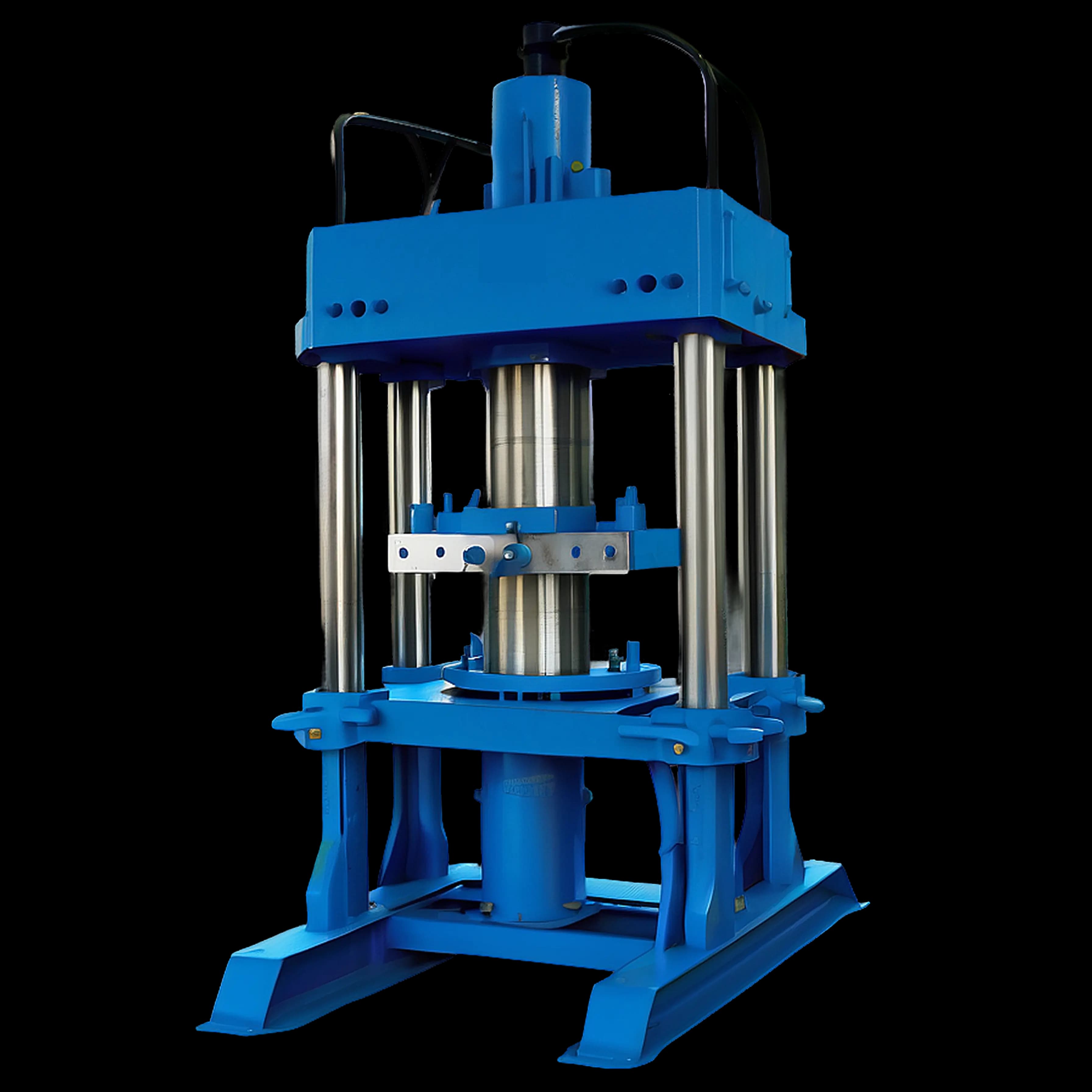
Presses
Every stroke is a hit by design, so Dynamic Baseline learns that rhythm as normal and the score flags what drifts away from it.
Proof
What predictive maintenance costs when it is missing.
Zero
Silent failures at RNPSA
50%
Better maintenance efficiency

“Continuous vibration monitoring gave us eyes we never had before. We can see tool crashes that would have been invisible, identify the exact moment and severity, and pull historical data to understand what went wrong.”
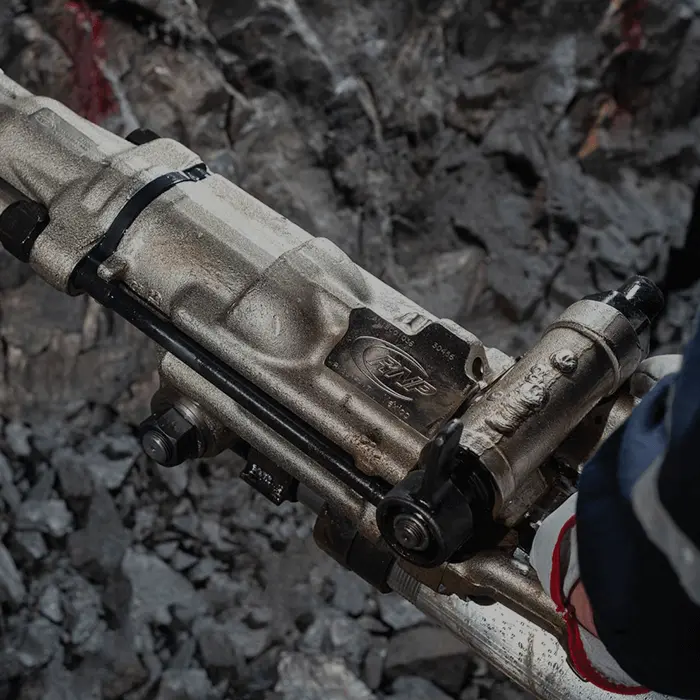
RNPSA builds mining equipment. Tool crashes used to surface at the next inspection, if at all; now each one shows with the exact moment and severity, and the work orders run through Maintain. Read the RNPSA story

100% machine visibility at Ranpak, with vibration analytics feeding systematic maintenance planning. Read the story
Questions people ask
A health score from 0 to 100 judged against a baseline profile (Dynamic Baseline, four ISO 10816 classes or eight machine-type profiles); seven operations metrics including bearing health, on the X, Y and Z axes and the combined vector; an FFT spectrum with harmonic markers and RPM, a spectrogram and a 3D view; 14 metric trend charts; health alerts when the score falls below 60, 40 and 20, plus shock and temperature events; delivery by email, push, SMS, the event log, Slack, Teams, Discord and webhooks; and work orders in Maintain, opened by a rule or by hand, beside preventive recurrences and meters.
By reading the change before it. SenseAi Embedded on the motor or spindle streams vibration from the source; the cloud scores the machine’s health against a baseline you choose and tracks seven indicators, including bearing health. When the score falls below 60, 40 or 20, a health event fires through the channels you set and can open a work order in Maintain.
Preventive maintenance runs on the calendar or a counter: every month, or every 2,000 runtime hours. Predictive maintenance runs on the machine’s condition: the work order opens when the vibration says a bearing is going. IoTFlows does both in Maintain, on one board: a recurrence on the work order for calendar jobs, meters counted from the sensor for runtime hours or parts, and health alerts for condition.
Fourteen metric trends, each with a note on what makes it rise: RMS velocity, peak acceleration, crest factor, peak-to-peak, kurtosis, envelope kurtosis, dominant spectral energy, zero-crossing rate, mean, standard deviation, variance, energy, skewness and mean absolute, on the X, Y and Z axes and the combined vector.
On the machine’s vibration judged against a baseline profile: Dynamic Baseline, which learns the machine, one of four ISO 10816 classes, or one of eight machine-type profiles. The confirm dialog recalculates the score when you change the profile.
Yes. Bearing health is one of the seven operations metrics on the Health tab, scored from the high-frequency part of the vibration signal where bearing defects show first. Envelope kurtosis, the most sensitive bearing indicator, rises with the repetitive impacts a damaged bearing produces and is charted on the X, Y and Z axes and the combined vector.
No. Health alerts fire at fixed points, when the score falls below 60, 40 and 20. Shocks are detected well past 200 g; the shock alert threshold runs from 20 to 100 g (100 g by default), and temperature (70 °C and 80 °C) events ship with default thresholds you can change on the machine’s Event Notifications page when a machine genuinely runs rougher or hotter than most. The baseline profile does most of the work.
IoTFlows does not publish a lead-time figure, because no measured case exists yet. Bearing-failure progression in the reliability literature (ISO 10816 and 20816) runs from weeks to months between the first measurable change and failure; the sensor catches bearing wear and other faults before they become failures.
SenseAi Embedded. It mounts on the motor or spindle itself, so it reads vibration at the source, adds temperature and the advanced health analytics, and is IP67 for washdown and outdoor positions. It attaches magnetically in seconds and calibrates in under five minutes.
Documentation
Want the detail? These guides walk through each feature step by step.
- Monitor machine health and vibrationThe Health tab: score, seven metrics, FFT, spectrogram and the 14 trends.
- Choose a machine health baseline profileDynamic Baseline, ISO 10816 classes and machine-type profiles.
- Review and dismiss machine eventsThe Event Alerts list and the two ways an event becomes a work order.
- Set alert rules for a machineTen event types, their thresholds and the six channels.
- Send alerts to Slack, Teams or DiscordChat integrations set up once and reused on every machine.
- SenseAi EmbeddedVibration at the motor, IP67, temperature.
- Trigger maintenance from meter readingsRuntime hours or part count toward a trigger point.
- Schedule preventive maintenanceRecurrence as a rule on a work order.
Related guides
Formulas, worked examples and advice you can use on your own floor.
- Maintenance and reliability: How to choose a maintenance strategy for each machine

- Maintenance and reliability: Usage-based maintenance from run hours and part counts

- Maintenance and reliability: How to build a preventive maintenance schedule that holds

Put a sensor on the machine you worry about most
Start with 10 machines for four weeks, the ones you worry about most. A SenseAi Embedded on the spindle or motor reads at the source.