


Compare
Sensor-based vs PLC machine monitoring
A sensor reads what the machine does. The control reports what it was told to do. Here is what each one sees, what it takes to connect, and why most floors end up using both.
The short answer
Read the control where it talks. Put a sensor everywhere else.
Controller data carries the cycle, the part count and the alarm, but only on machines whose control can be reached and read; equipment not designed for it needs a custom adapter, and some can’t be read at all.[1]
A sensor reads any machine from the outside, usually installed within days for a few hundred to a few thousand dollars per machine, in one MEP’s figures.[13] On a mixed floor, the two together give every machine a state and a count, and the newer machines their alarms.
At a glance
Sensor, controller, or both, side by side.
Every outside line links to a standards body, a machine maker, a university program or a peer-reviewed paper at the bottom of the page.
| Compared | Sensor on the machine | Controller or PLC | Both |
|---|---|---|---|
| What it reads | Vibration, current or a status light, from the outside[9],[14] | Cycle events, part count, alarms and overrides, from the control[6],[7] | Both, on one machine record |
| Machines it covers | Any machine, including older ones retrofitted[15] | Machines whose control can be read; others need a custom adapter, or can’t be read at all[1] | Every machine, with control data where the control allows |
| What it takes to connect | A sensor per machine, usually installed within days[13] | An adapter per device, often a PC and Ethernet to the control[1],[6] | Sensors first; controls added machine by machine |
| Part counts | 96.2% against manual logs from current alone, in a 2025 study[10] | Read from the control[6] | From the control where it counts; from the sensor everywhere else |
| Running or idle | Over 80% on eight machine tools (2018); 98.14% on one (2022). Cutting air is the hardest case[11],[12] | Cycle events from the control[6] | The control’s state and the sensor’s signal side by side |
| Alarms and process data | Not from the signal; reasons come from operators or rules | Alarm history, macro variables, motor currents and temperatures[7] | Alarms feed the same rules as the sensors |
| Machine condition | Sensors on machines and tools can predict tool breakage and wear[15] | Servo and spindle motor currents and temperatures[7] | Condition from the sensor, load from the control |
| Cost to connect | A few hundred to a few thousand dollars per machine, in one MEP’s figures[13] | Libraries, adapters and integration hours; the control maker’s own library page names no price[8] | Sensors per machine; controls priced as a project |
The sensor
It sees what the machine does
A sensor reads the signal the machine gives off: vibration, current or a status light. With signal processing, that signal yields running, stopped, cycle times and part counts; a 2025 study counted CNC parts from current alone at 96.2% against manual logs.[10]
The hard case is the pause that looks like work: in a 2022 study, cutting air was the state a current model got wrong most often.[12] Fixed thresholds also need resetting in high-mix work.[11]
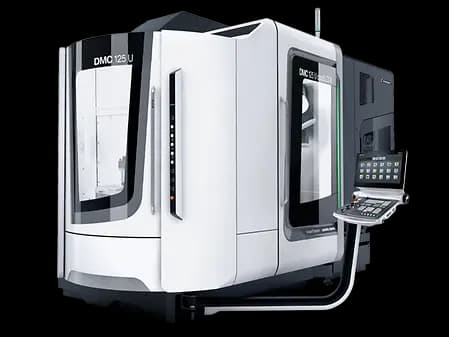
The control
It knows what the machine was told. Where the control can be read.
A control can report cycle events, part counts, alarm history, macro variables and motor currents.[6],[7] Getting there takes an adapter per device and often a PC and an Ethernet connection to the CNC; some legacy controls need an added Ethernet converter.[1],[6],[7]
Even machine makers reach for sensors where the control can’t help: Mazak’s SENSOR BOX reads a status light or power use on equipment without MTConnect.[9]
Before you plan
Can your machine talk? Five questions per machine.
- Is there a network port on the control? No port usually means an added converter or board, or a sensor.[7]
- Does it speak MTConnect or OPC UA? If not, it needs a custom adapter.[1]
- Is the control’s option or library licensed? Controller data paths often need the maker’s software and a PC.[6],[8]
- Can anything be read at all? Where no data can be extracted, a standard won’t help.[1]
- Will IT approve a connection to the control? For many plants it’s a security concern, and controller data travels over the plant’s Ethernet. A sensor never touches the control and can report over cellular instead.
Four or five yes answers: read the control, and add a sensor if you want vibration and health. Anything less: start with a sensor.
The standards
MTConnect, OPC UA and FOCAS, in plain words.
- MTConnect defines what machine data means. It “does not control machines” and does not compete with OPC UA or MQTT.[2] Its model documentation names version 2.8 as the latest.[3]
- OPC UA is a framework that can read and write, governed by access permissions.[4] A 2019 companion specification carries the MTConnect model over OPC UA.[5]
- FOCAS is FANUC’s library for talking to its CNCs from Windows applications, over Ethernet or HSSB.[8]
Both, in IoTFlows
One machine record, from either source
A SenseAi attaches magnetically in seconds and calibrates in under five minutes, on any machine, with no connection to the control. On Enterprise, the IoTFlows edge device reads controls and PLCs over MTConnect, OPC UA, Modbus TCP, EtherNet/IP, Profinet and MQTT.
Both land on the same machine record, and alarms feed the same rules as the sensors, so an alarm can open a work order in Maintain. Controller connections go live in one week to a month, priced by scope.
How to pilot
Test both on one cell.
- Pick a mixed cell. One machine with a networked control, one without.
- Put a sensor on both. Read the control on the one that talks.
- Compare a week of states. Where the control and the sensor disagree, walk the floor and find out why.
- Count the work. Note the adapters, PCs, IT tickets and hours each path took.
An IoTFlows pilot runs on 10 to 25 machines for four weeks, with no commitment to buy.
Questions people ask
A sensor on the machine reads what the machine physically does, through vibration, current or a status light, so it works on any machine of any age. PLC or controller monitoring reads what the control reports, such as cycle events, part counts, alarms and overrides, so it carries more detail but only where the control can be reached and read. Many floors use sensors on every machine and add control data where it is available.
Yes. A sensor reads running, stopped and, with the right signal processing, part counts from the outside. A 2025 peer-reviewed study counted CNC parts from total current alone with 96.2% accuracy against manual logs, and a university MEP puts sensor retrofits at a few hundred to a few thousand dollars per machine, installed within days. Machine makers use the same approach: Mazak’s SENSOR BOX reads a status light or power use on equipment without MTConnect.
Two peer-reviewed studies give a range. A 2018 study recognised operating state on eight kinds of machine tools in a real factory from spindle current with over 80% accuracy on every machine, and noted that fixed thresholds must be reset often in high-mix work. A 2022 study reached 98.14% across five states on one machine, with cutting air, the spindle moving without removing material, the state it got wrong most often. No neutral study yet compares sensor and controller state on the same machines.
MTConnect defines what machine data means; the MTConnect Institute says it does not control machines and does not compete with transports such as OPC UA or MQTT. OPC UA is a framework that can read and write, governed by access permissions. The two bodies released an OPC UA companion specification for MTConnect in 2019, so MTConnect’s model can travel over OPC UA. The MTConnect model documentation names version 2.8 as the latest.
No. AMT notes that equipment not designed for MTConnect always needs a custom adapter, and that where no data can be extracted, MTConnect is impractical. FANUC’s own data path needs a PC and an Ethernet connection to the CNC, and its monitoring software reaches some legacy controls only through an added Ethernet converter.
For many plants, yes: a control connection puts a new device on the machine and on the plant network, so IT usually reviews it first, and a framework such as OPC UA can write as well as read, governed by access permissions. A sensor never connects to the control or the PLC, so it can’t change a thing on the machine, and over cellular it stays off the plant network. Where controller data is worth it, connect only the controls you choose.
Yes. A SenseAi attaches magnetically in seconds and calibrates in under five minutes on any machine, and on Enterprise the IoTFlows edge device reads controls and PLCs over MTConnect, OPC UA, Modbus TCP, EtherNet/IP, Profinet and MQTT. Both feed the same machine record, and alarms feed the same rules as the sensors, so an alarm can open a work order. Controller connections go live in one week to a month, priced by scope.
Documentation
Want the detail? These guides walk through each feature step by step.
Start with a sensor on every machine
Start with 10 to 25 machines for four weeks, with no commitment to buy, and add controller data where your controls allow.
Sources
Every statement about another company on this page comes from that company’s own public pages, read on October 13, 2026. Pages change: tell us if something here is out of date and we will correct it. Product names are trademarks of their owners.
- [1]Digital Manufacturing for Legacy Equipment Using a Standards-Based Approach: An MTConnect Use Casewww.amtonline.org/article/digital-manufacturing-for-legacy-equipment-using-a-standards-based-approachRead October 13, 2026
- [2]What is MTConnect? A Developer-Friendly Introduction | MTConnectwww.mtconnect.org/blogs/what-is-mtconnectRead October 13, 2026
- [3]MTConnect SysML Model Documentationmodel.mtconnect.org/Read October 13, 2026
- [4]Unified Architecture | OPC Foundationopcfoundation.org/about/opc-technologies/opc-ua/Read October 13, 2026
- [5]OPC Foundation and MTConnect Institute announce release of the OPC UA Companion Specification for MTConnectopcfoundation.org/news/press-releases/opc-foundation-and-mtconnect-institute-announce-release-of-the-opc-ua-companion-specification-for-mtconnect/Read October 13, 2026
- [6]Shop Floor Data Collection Software & Tracking | FANUC Americawww.fanucamerica.com/es-mx/productos/software/fasdataRead October 13, 2026
- [7]CNC Machine Monitoring Software (MT-LINKi) | FANUC Americawww.fanucamerica.com/products/software/cnc/mt-link-iRead October 13, 2026
- [8]FOCAS2 Library | FANUC Americawww.fanucamerica.com/products/software/cnc/focas2-libraryRead October 13, 2026
- [9]Monitoring & Analysis - Technology & Solutions | Mazak Corporationwww.mazak.com/ca-en/technology/monitoring-analysis/Read October 13, 2026
- [10]Part fingerprinting-based productivity monitoring of CNC machines with low-cost current sensors | NSF Public Access Repositorypar.nsf.gov/biblio/10632342Read October 13, 2026
- [11]Operating-state identification of machine tools by power-line current sensing (Transactions of the JSME, 2018; in Japanese, English abstract)www.jstage.jst.go.jp/article/transjsme/84/860/84_17-00432/_article/-char/ja/Read October 13, 2026
- [12]An Energy Data-Driven Approach for Operating Status Recognition of Machine Tools Based on Deep Learningpmc.ncbi.nlm.nih.gov/articles/PMC9460611/Read October 13, 2026
- [13]Enhance Your Existing Equipment with Machine Monitoring | University of Louisville Service Centerslouisville.edu/servicecenters/news/enhance-your-existing-equipment-machine-monitoringRead October 13, 2026
- [14]Is Legacy Equipment Slowing You Down? | Purdue MEPmep.purdue.edu/news-folder/is-legacy-equipment-slowing-you-down/Read October 13, 2026
- [15]Machine Condition Detection For Milling Operations Using Low Cost Ambient Sensors | NISTwww.nist.gov/node/1268861Read October 13, 2026